Module 17 lesson 1
˗ˏˋInterference ´ˎ˗
˗ˏˋ ★ ˎˊ˗Incoherent & coherent light˗ˏˋ ★ ˎˊ˗
Learning outcomes
- Distinguish between Incoherent and coherent light.
- Explain Young's Experiment
- Describe interference of coherent light
- Compare between constructive and destructive interference.
- Find the wavelength of light using an interference pattern.
- Investigate the relation between
wavelength and color of light.
By Duha 10adv1
Light behaves like a wave; It diffracts when passing an edge, and reflection and refraction can be explained using wave models. One of the strongest pieces of evidence for the wave nature of light is interference, which occurs when waves overlap and combine.
What can you observe in these videos? what difference do you notice?
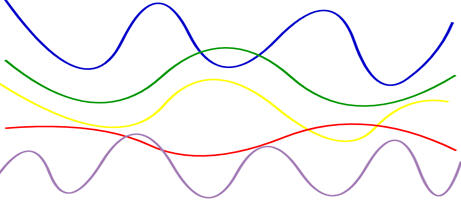
incoherent light is light whose waves are not in phaseyou can compare incoherent light to rainfall; irregular wave pattern & choppy.one example of incoherent light is white light, however due to light waves' high frequency, white light looks even.
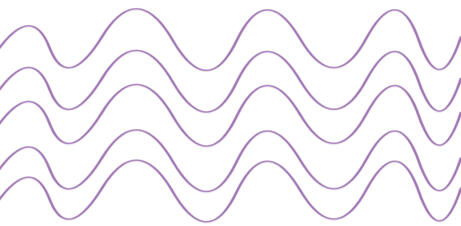
coherent light is light made up of waves of the same wavelength that are in phase with each othercoherent light can be created by a single point source. it has a regular wave pattern
A regular wavefront also can be created by multiple point sources when all point sources are in phase.
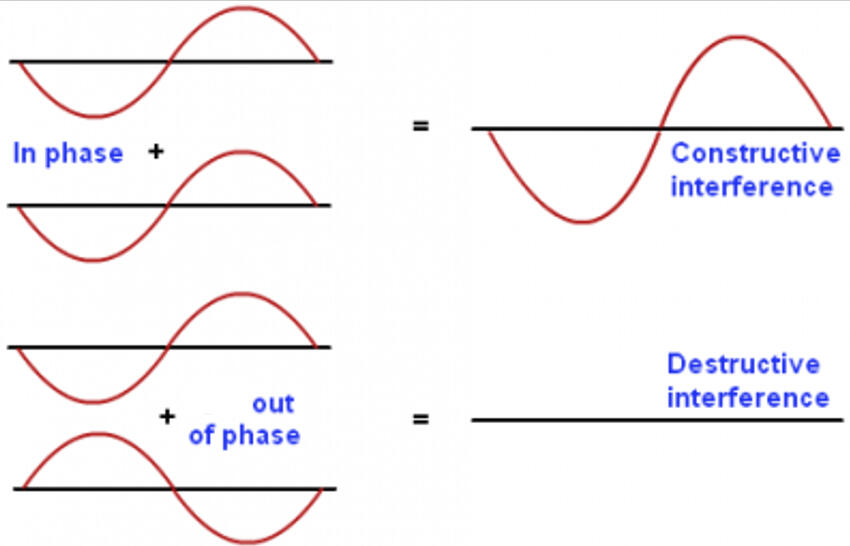
✩₊˚.⋆☾⋆⁺₊✧Interference of Coherent light ✩₊˚.⋆☾⋆⁺₊✧
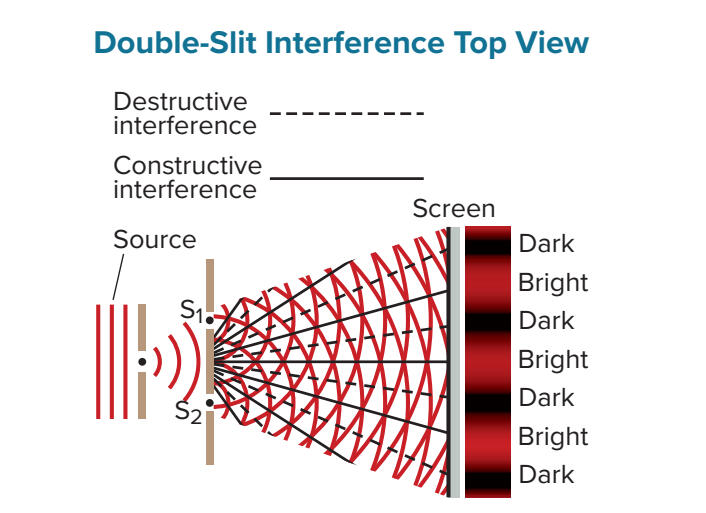
Between 1801 and 1803, English physician Thomas Young conducted investigations that confirmed the wave nature of light. In a key experiment, he passed light through a narrow slit to make it coherent, then through two closely spaced slits. The overlapping light produced a pattern of bright and dark bands on a screen, known as interference fringes. These resulted from constructive and destructive interference of light waves from the two slits.
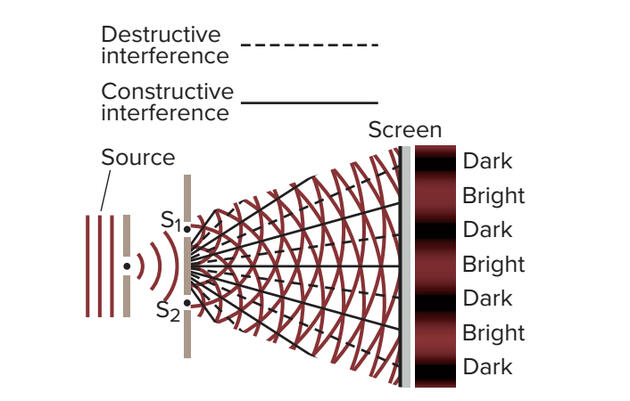
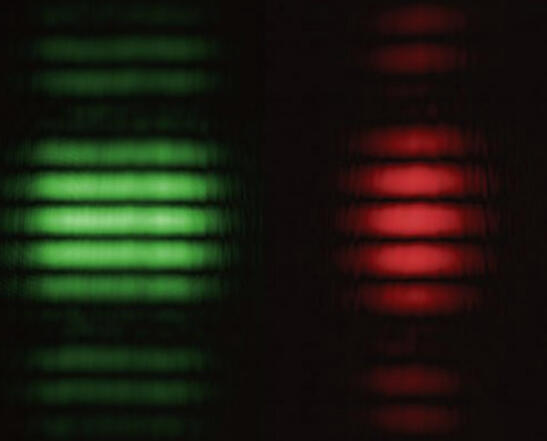
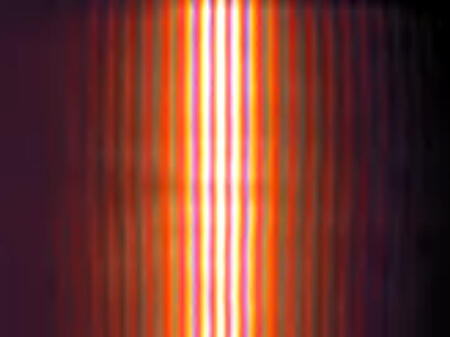
When monochromatic light, which is light of only one wavelength, is used in a double slit investigation, the constructive interference produces a central bright band of that color with other bright bands of similar width and brightness on either side. the intensity of the bright bands decreases the farther the band is from the central band.between the bright bands there are dark bands which are the result of destructive interferencethe positions where constructive and destructive interference occur depends on the wavelength of that given color.
When white light is used in a double-slit investigation, however, interference causes the appearance of colored spectraThe various bands of color from the visible spectrum overlap on the screen.
All these colors have constructive interference, and the central band is white.
Because the positions of the other bright bands of constructive interference depend on wavelength, each color's band is at a different position, resulting in spectra of color.
ˏˋ ♡Generation of coherent light ♡ ˎˊ˗
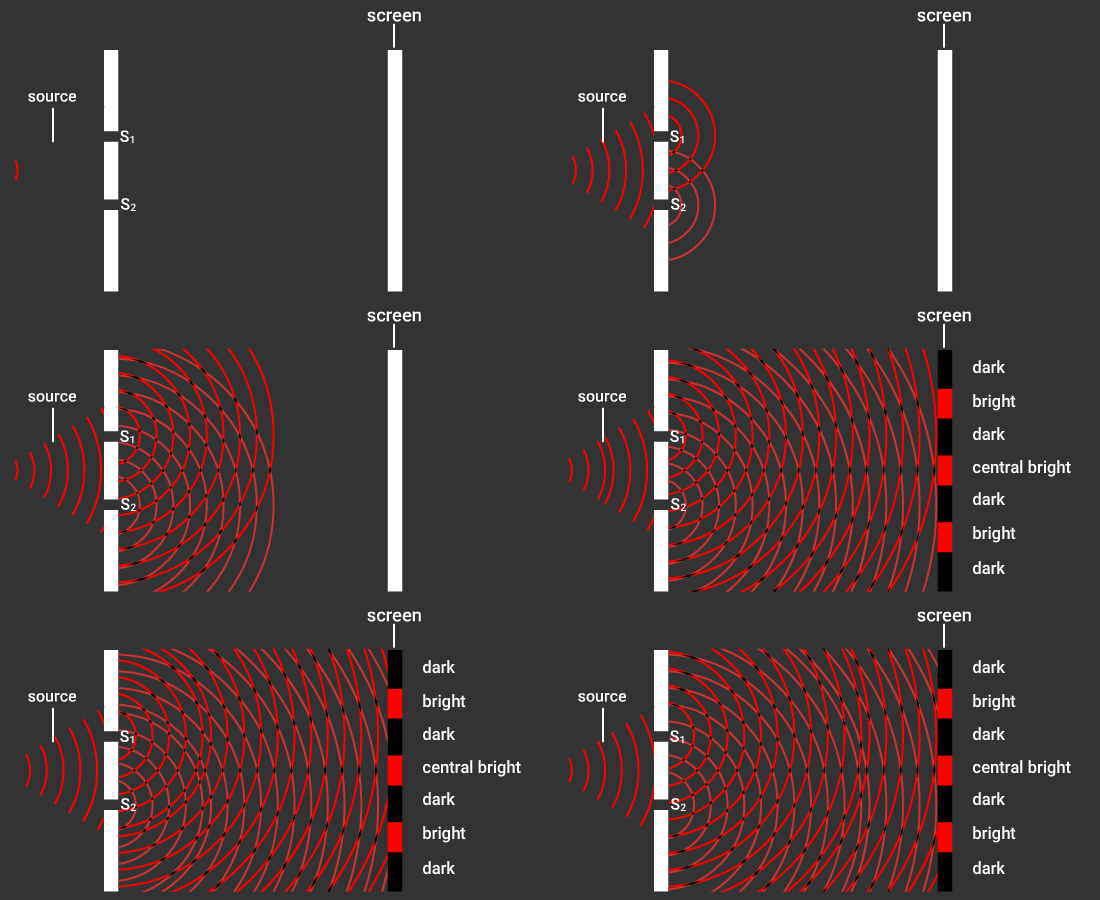
Light from a monochromatic source produces incoherent light.Placing a light barrier with a narrow slit in front of the monochromatic light produces coherent light.Because the width of the slit is very small, only light from a tiny region of the source passes through the slit.
Diffraction by the slit produces nearly cylindrical wavefronts
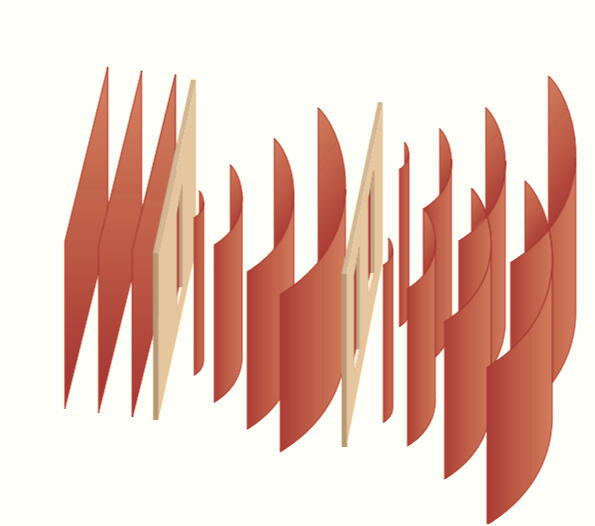
The second barrier has two very small slits.
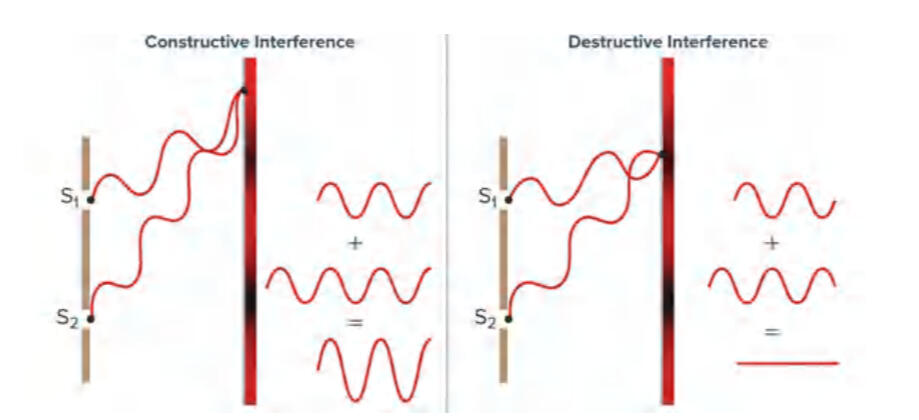
Because a cylinder is symmetrical, the two portions of the wavefront arriving at the second barrier are in phase.The two slits at the second barrier produce nearly cylindrical wavefronts. These two wavefronts can then interfere.Depending on their phase relationship, the two waves undergo constructive or destructive interference.If the interference is constructive when the light hits a screen, you will see a bright band.If it is destructive, you will see a dark band.
༺☆༻Double-slit interference༺☆༻
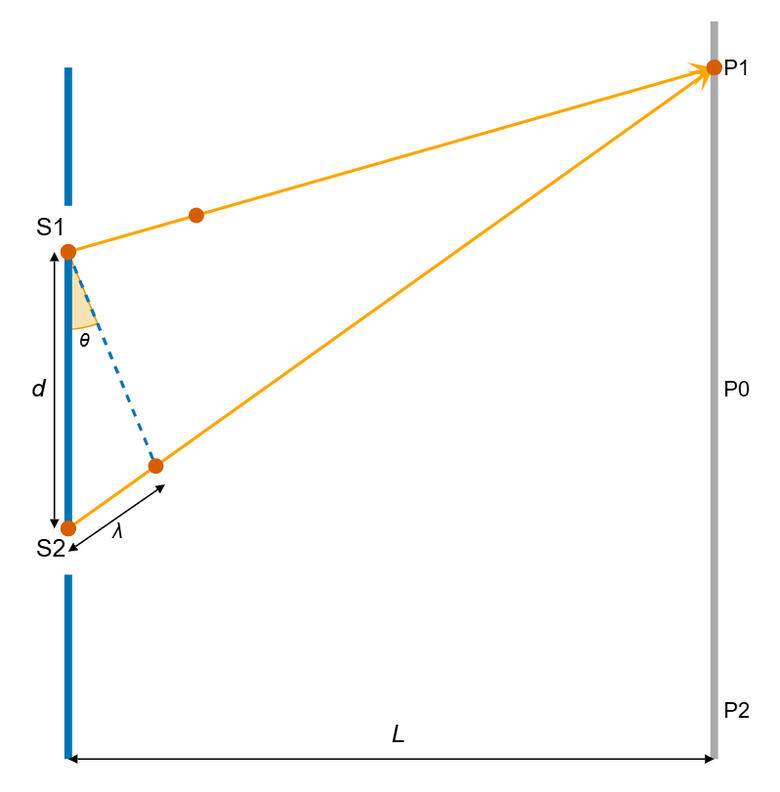
The wavefronts interfere constructively and destructively to form a pattern of light and dark bands.light that reaches point P0 travels the same distance from each slit.Because the waves are in phase, they interfere constructively on
the screen to create the central bright band at P0.There is also constructive interference at the first order bright band (P1) because line segment P1S2 is one wavelength (λ) longer than the line segment P1S1.
Thus, the waves arrive at P1 in phase.The equation for calculating the wavelength in a double slit investigation is
λ= xd/L
x being the distance between the central bright band and the first-order bandd being the distance between the slitsL being the distance from the slits to the screen